Back to News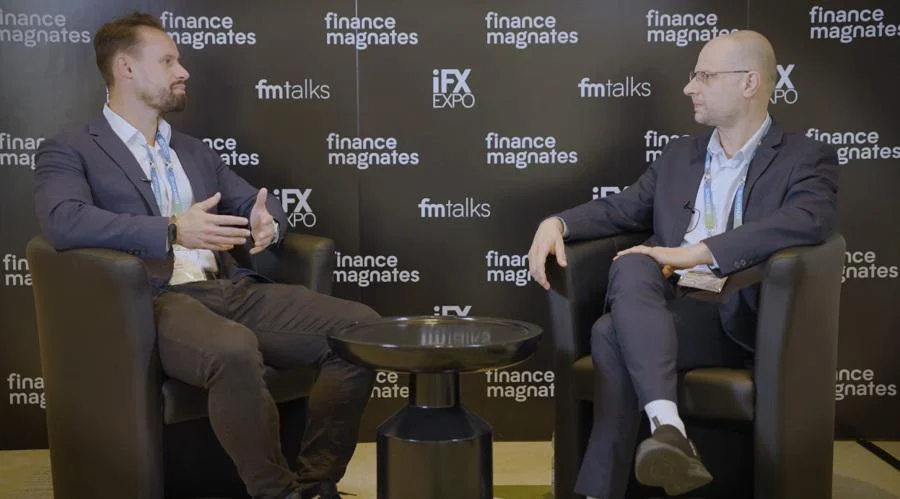
What You Actually Own When Buying a Tokenized Asset
By Exbasi Intelligence
Sourced from Finance MagnatesTokenization is sold as access: anyone, anywhere, one tap into assets that used to be gated. RWA Labs Chief Business Officer Anton Golub says access is the easy part. The hard parts, the two that decide whether tokenized real-world assets become real markets or expensive disappointments, are what sits behind the token and who stands ready to buy it back.Start with the question that trips up almost everyone who buys a tokenized stock: what do you actually own?"Usually when you buy a stock on the stock market, you own the stock," Golub told Finance Magnates at iFX Expo in Cyprus. "Now in tokenization, many times when you buy a token that represents (a stock), you're not buying the stock, you're buying the wrapper."That distinction sounds academic until a wrapper turns out to be empty. Asked about the recent scramble around tokenized SpaceX exposure, when several platforms launched a big campaign tied to a SpaceX IPO and pulled it days later, Golub is blunt about what was underneath."There was nothing behind the wrapper," he says. "That's why a lot of these platforms had to refund the users because they bought into something that was not objectively real."Golub's point is not that tokenization is a trick. It is that the token and the ownership are two different things, and the gap between them is where the risk lives. What actually sits behind a given wrapper is the fine print a broker or platform has to read rather than the marketing.What Actually Counts as a Real-World AssetBefore the ownership question comes a definitional one that, as Finance Magnates noted, comes up constantly: people keep asking what a real-world asset actually is. Golub prefers to define the category by what it excludes."Cryptocurrencies are not real-world assets," he says. Bitcoin and Ethereum are native tokens of their own blockchains. Utility tokens and meme coins are creatures of crypto too. None of them are real-world assets.A real-world asset is anything that already exists in the world outside the chain. "A stock is a real-world asset. A bond is a real-world asset. A futures contract," Golub says. Some of those are already digital: a stock today exists only in digital form. But the category also covers the physical, oil, gold, commodities, real estate.From left: Anton Golub, Founding Member, RWA Labs, and Yam Yehoshua, Chief Editor, Finance Magnates.The dividing line is legal, not technical. "The reason why real-world assets are a special category within the digital asset industry is because their legal framework and their ownership exist outside of the blockchain," Golub says.Buy tokenized real estate and there is still a notary, still an authority, still a registry off the chain that records who owns the building. The entire tokenization project, in his framing, is the work of mapping those off-chain rights onto a chain without losing them in translation.Tokenized Does Not Mean LiquidThe pitch for tokenization is access: something that was hard to buy becomes easy to buy. Golub's warning is to think one step past the purchase, to the sale."Many times when you tokenize an asset, it doesn't mean you actually made it liquid," he says. "If I buy a tokenized real estate and I'm very happy with it... and now I want to sell it, but there is nobody on the other side to buy when I'm selling, the part that's missing there is liquidity of the assets."The fix is not novel. It is the same machinery the brokerage industry already runs on. The way to resolve that problem, Golub says, is market makers. "The same way you have in [the] CFD brokerage industry, you have market makers, liquidity providers.The same way, you need to have market makers for tokenized real-world assets. Otherwise... you give access, but then you have a problem of actually getting out of that access."This is the line that should matter most to anyone running a trading venue. Tokenization does not remove the need for a liquidity layer; it relocates it. A platform that lists tokenized assets without market makers behind them has built a shop window customers can walk into but not out of.The Fix: A Token Has to Carry Real OwnershipAsk Golub what a properly built tokenized market looks like and the shape that emerges is familiar. Today, he notes, the only way to buy a stock of SpaceX is directly through a traditional finance institution.The tokenized version only works if the law and the infrastructure make the token equivalent to the share. When we compared that requirement to a stablecoin, a token that needs an actual asset pegged behind it, Golub embraced the analogy: exactly right, in his words."You need to have a token, and you need to have the actual ownership and redemption, let's call it like that, behind the token," he says. Two worlds, traditional and tokenized, but with equal rights for the end user and the same legal principles underneath. "Otherwise tokenization then doesn't make sense."For a broker or platform weighing whether to list a tokenized asset, that collapses into a short diligence checklist Golub's answers keep circling back to. Is there real ownership or redemption behind the token, or only price exposure? Is there a market maker committed to the other side of the trade? And does the token holder end up with the same rights as the traditional holder?Get those three right and tokenization is an efficiency gain. Get them wrong and it is a refund waiting to happen.Where The Regulated Entities AreGolub, who comes from Dubai, is upfront that he is not a neutral judge when the conversation turns to the UAE, but he makes a specific claim rather than a boosterish one. The country, he says, "has the most regulated crypto entities in the world," with more than 100 regulated companies, custodians, brokers, exchanges and asset managers. A big achievement, he adds, for a country that started on crypto regulation only recently.He is quick to widen the lens: the United States is the biggest capital market in the world, and Europe remains one of the largest, "maybe struggling with regulatory frameworks." How much can hang on a single license is clearest in the Binance case.Asked earlier in the conversation about Binance's application for a license in Europe under the region's new crypto framework, Golub was careful to note he was not speaking on behalf of the exchange and could only describe what is publicly announced.He was direct about the stakes, though: a rejection would be a big blow for Binance and for its European users, who would then have to work out how they access its products and services.More and more data points are pointing in the same direction: tokenization is no longer just a concept. It is becoming real financial infrastructure within the ecosystem.What’s interesting is that we are no longer talking only about experiments or pilot projects.… What Is NextTwo big trends, he says, are coming before the end of the year.The first is perpetual futures coming onshore. Perpetuals are the most popular crypto product in the world, and in the US there is now a big initiative to offer them under a regulated framework and bring the offshore product home. "There's a lot of appetite" in the US to trade them, he says.The second is prediction markets, and here Golub is blunt about the lineage. "Prediction markets are a great rebranding of binary options," he says. Put to him that the product is already spreading fast through the CFD space, with everyone now offering it through white labels, he agreed without hesitation.The open question is regulatory: binary options are risky for end users, and the coming fight is how to scale prediction markets in a compliant way that actually protects them.There may not be one answer. In many countries, betting and gambling laws already exist, and the slice of the product that behaves like a wager may belong under those frameworks, while the more financial applications sit under financial regulation. Where each contract lands is the line the industry has not yet drawn.That is the throughline across everything Golub covers. Tokenized assets, onshore perpetuals, prediction markets: the technology to launch them exists today. What is still being built is the legal and market structure that decides whether any of it holds up after the customer clicks buy.