Back to News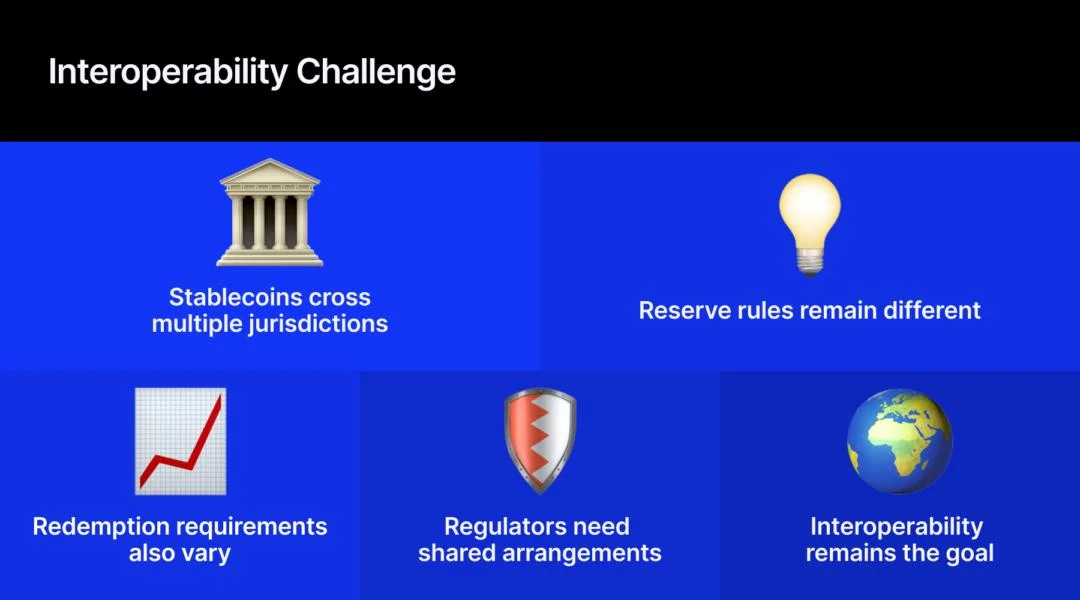
From MiCA to GENIUS: Why Crypto's Next Regulatory Test Is Cross-Border Coordination
By Exbasi Intelligence
Sourced from Finance MagnatesThe central debate in digital asset policy used to be whether to regulate at all. That question is now settled. MiCA's transitional period ended July 1st, 2026; the UK finalized its cryptoasset rulebook on June 30th; the US celebrated the one-year anniversary of the GENIUS Act becoming law; and the SEC and CFTC issued joint guidance in mid-March that classified many digital assets as digital commodities.What now keeps industry participants and policymakers up at night is whether rules written in Washington, London, and Brussels can interoperate and work alongside one another.Where We AreThe end of MiCA's transitional period triggered a major shakeout in the European market. Of the more than 1,200 firms previously operating under national frameworks, only around 244 secured authorization. The UK's full regime goes live in October 2027, while in the US, perpetual futures were brought onshore in May 2026, the GENIUS Act takes effect in January 2027, and negotiators continue work to finalize and pass the CLARITY Act.Recently, the Transatlantic Taskforce for Markets of the Future issued a joint US-UK statement affirming stablecoins as an important vehicle for innovation in digital money and committed to working together to develop clear, consistent regulatory pathways forward to enable stablecoins to flourish between the two jurisdictions.In a first for digital assets policy, two of the world's major financial jurisdictions are developing interoperable and convergent frameworks designed to enable and promote digital asset-based finance. That consensus is new, and it matters.However, agreeing that something belongs inside the perimeter isn't the same as building one that works across borders. Take a stablecoin issued in the UK, held by a customer in the EU, and used to settle a transaction with a US institution. The transaction may happen almost instantly, but the rules covering reserves, redemption, custody, reporting, and insolvency still sit across three separate systems.The goal shouldn't be identical rules everywhere. We should aim to make sure different regimes offer broadly comparable protections and recognize regulated activity taking place elsewhere.Why Frameworks Alone Are Not EnoughHaving frameworks in place and having frameworks that work together are different things. The technology hasn't slowed down while legislation was being written. DeFi, tokenization, and agentic payments are moving from experiment to infrastructure.Each jurisdiction built its framework for its own market, legal system, and political moment, producing serious rulebooks that are not designed to talk to each other.Stablecoins illustrate this most sharply. Issuers face different rules on what counts as reserves, where those reserves are held, how quickly customers can redeem, and what happens if the issuer fails. These differences are manageable for a single-market issuer. They become structural problems the moment a stablecoin crosses borders.Making regimes work together doesn't mean erasing those differences. It means agreeing that reserves are available, customers can redeem, assets are protected, and regulators know who's responsible if something goes wrong.The networks moving tokenized assets are global, while the firms using them remain accountable to national regulators. The challenge is keeping that accountability without adding friction every time an asset crosses a border.What Happens If We Get This WrongThe consequences fall across three areas, and none are abstract.For firms, the cost compounds. Running separate legal, compliance, and reporting structures suppresses the ability for firms to quickly scale and pushes businesses toward whichever market is easiest to navigate, including those markets with no regulatory frameworks in place. For instance, MiCA's compliance burden falls disproportionately on smaller firms, which face many of the same requirements as much larger exchanges.For the financial system, fragmentation blurs the full picture. One regulator may oversee the issuer, another the reserves, another the platform. If regulators aren't already working together, especially in a domestic capacity, let alone international interoperability, responding to a market failure or stress becomes significantly harder - the costs of which can be immense.For economies, investment flows toward markets offering both regulatory clarity and access. The inability to bridge regulatory distinctions between markets will affect how capital moves and where it moves.The countries setting the standards now will shape the rules for the next era of financial markets, which is why the establishment of the Taskforce and the recent statement are so critical to building this next era underpinned by democratic values.What Needs to HappenThe tools for interoperability already exist. The EU demonstrated that a single rulebook can work across 27 countries. The US has created a federal framework for payment stablecoins and begun clarifying the roles of its main market regulators. The UK built the Digital Securities Sandbox, the only live supervised testing environment for digital securities anywhere in the world.Three things can happen now, without new laws.First, governments need a clearer process for deciding when another jurisdiction’s rules offer comparable protections. The GENIUS Act lets foreign stablecoin issuers operate in the US where the Treasury Department judges their home rules comparable.The UK and US should use the Transatlantic Taskforce to agree on what that comparison covers as a basis for determinations by the Stablecoin Certification Review Committee, including on the topics of reserves, redemption, safeguarding, reporting, and financial crime controls, and bring other major markets into the discussion.Second, regulators need practical arrangements for supervising cross-border activity. Common definitions help, but aren't enough. Authorities need clear channels for sharing information, coordinating enforcement, and deciding who leads if an issuer fails.Just released - ABA and 52 state banking associations urge to uphold GENIUS Act's ban on stablecoin interest: The March 2026 joint SEC-CFTC guidance shows what interoperability looks like. The Financial Stability Board has done the groundwork. What's missing is turning those principles into working arrangements.Third, start with what’s already working. The UK's Digital Securities Sandbox should be the starting point for jointly supervised testing of cross-border activity. HSBC was the first firm approved to go live in the Sandbox this month, operating as a digital securities depository for bond issuance and settlement.That kind of real-world proof of concept does more for confidence than any number of consultation papers—the question now is whether supervised activity can extend across borders, not just within them.The competition of the past five years produced the frameworks we now have. Coordinating on frameworks that each country built independently and takes pride in is hard. The alternative is three serious, well-built systems that cannot work together and that serve no one.The pieces are there. Global policymakers will need to connect them.