Back to News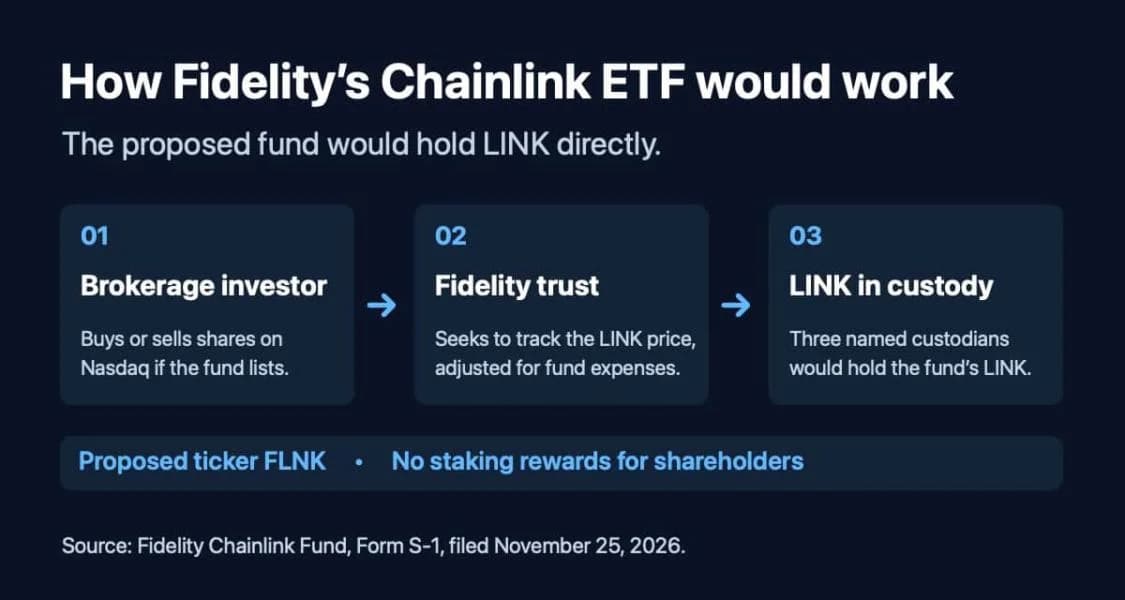
Fidelity Files for Spot Chainlink ETF With Proposed Nasdaq Listing
Fidelity has filed with the US Securities and Exchange Commission to launch a spot Chainlink exchange-traded fund. The proposed Fidelity Chainlink Fund would hold LINK directly and is expected to list on Nasdaq under the ticker FLNK, according to its November 25 registration statement.The fund would track the price of LINK using a Fidelity reference rate, adjusted for expenses and other liabilities. The preliminary filing leaves some terms, including the sponsor fee, open. The registration must become effective before the fund can sell shares.Direct LINK holdings without stakingFidelity named Anchorage Digital Bank, BitGo Bank & Trust and Coinbase Custody as custodians for the fund’s LINK. Authorised participants would be able to create or redeem large blocks of shares using LINK or cash. Investors buying shares on Nasdaq would trade at market prices, which could be higher or lower than the value of the LINK backing each share.The fund would not stake its LINK. As Fidelity states in the prospectus, “Shareholders will not receive staking rewards through the Trust.” That leaves investors with exposure to the token’s price after fund expenses. Chainlink staking is a separate mechanism in which participants commit LINK to help secure certain network services and can earn rewards.Fidelity would enter a market that already includes the Grayscale Chainlink Trust ETF, which trades under GLNK. BNC previously covered into an exchange-traded fund. Fidelity’s fee and other final terms will help determine how the proposed product compares with existing funds.How Chainlink usage reaches the tokenChainlink supplies blockchain applications with outside information, such as asset prices used by lending protocols to value collateral. It also provides infrastructure for moving data and assets across blockchains. LINK is the network’s native token and is used to pay for services and support staking.Some users pay for Chainlink services in other currencies or digital assets. Under the network’s payment abstraction system, eligible fees can be converted into LINK. Chainlink says part of that revenue goes into its on-chain reserve. These conversions are one way service usage can produce demand for LINK. Fund shareholders would hold an interest in a trust that owns the token, with no claim on Chainlink’s service revenue.